Rav Yitzchok Isaac Rosenbaum zt"l
הרב יצחק אייזיק בן איתמר רוזנבאום זצ"ל
Tammuz 14 , 5760
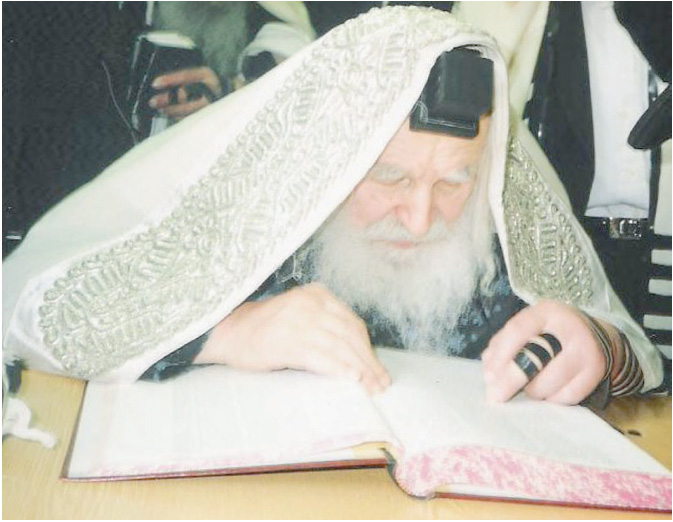
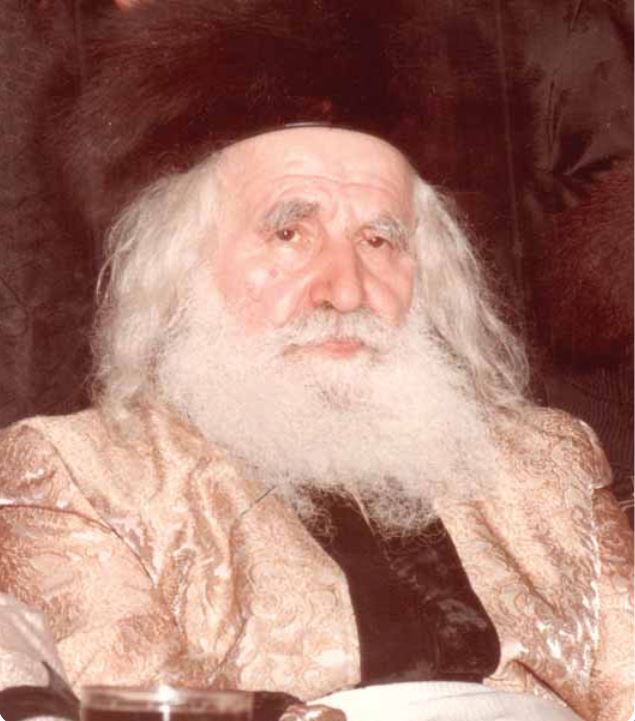
Rav Yitzchok Isaac Rosenbaum zt"l
Son of Rav Isaamar and Malka Rosenbaum of Nadvorna
Rav Yitzchok Isaac was born on 21 Teves תרס''ו in Czernowitz Bukowina. Rav Isaamar was visitng his father Rav Meir in Kreshtnif a telegram arrived announcing the birth of a baby boy. As Rav Issamar packed up and turned to leave for home, his father accompanied him to to the train. On the way, they passed an entourage of Jews escorting a hachnasas Sefer Torah. Rav Meir turned to Rav Issamar and declared: “See that? You just had a living sefer Torah born unto you!”
Rav Yitzchok Issac was just two years old when his grandfather Rav Meir Kretshnifer passed away. Nevertheless, he used to tell his family that the image of his holy grandfather's face was forever engraved in his mind. Despite his young age, he clearly remembered him.
Rav Yitzchok Isaac was named after his holy ancestor, Rav Yitzchok Isaac of Komarno.
Rav Yitzchok Isaac was not born with extraordinary talents or intellectual gifts. On the contrary, when it came to learning, Torah study came with difficulty and there were many hurdles to overcome in his effort to succeed. Nonetheless, nothing stands in the way of desire. Enlisting his iron clad will he constantly beseeched his Father-in-Heaven to grant him a strong memory. “I don’t need to remember mundane details about worldly matters-- but please grant me the ability to retain all that is in Your Torah!”
These words poured out from his pure heart accompanied by many tears. Eventually, his perseverance bore fruit and he experienced an opening of his heart and mind.
When it came to avodas Hashem, it was abundantly clear that young Yitzchok Isaac was already a spiritual giant. When he learned alef-bais, he reviewed the letters over and over throughout the day until he was able to read and daven. He then reviewed the siddur until he knew all the davening by heart.
He applied the same determination to his early childhood learning. Any paragraph of Chumash (and later any chapter of Mishnayos) that was introduced to him, was reviewed and worked on until he memorized them in their entirety. He would go from person to person in the bais medrash asking them if perhaps they could teach him just one Mishnah. Once he understood what he had learned, the reviews began in earnest until he knew the material by heart. He never played childish games; he just sat and reviewed and studied. Some adults tried to dissuade him, commenting that all his efforts would never amount to anything significant, yet this failed to change his mind.. While understanding anything new remained a difficult task, once he succeeded to grasp what he was learning, the impression it made was so strong that he never forget it again.
He later described those younger years recalling that after Bar Mitzvah he accepted upon himself to complete no less than forty blatt Gemara each week! It became a common sight that after studying for hours on end with no interruption, when he eventually did get up , the chassidim or other visitors in his fathers bais medrash would take turns sitting in his chair, attempting to soak up the young masmid's kedusha. The space that he vacated was now certainly saturated with lingering kedusha resulting from his extraordinary hasmada.. Following one such long stretch of learning, he stepped out onto the porch to reinvigorate himself with some fresh air and sunlight.
His mother saw him and declared: “Issac'il have you nothing better to do with your precious time?”
Without mentioning the uninterrupted hours-long seder he just completed, he turned around and went back inside for another lengthy stretch of uninterrupted study!
By the time he was a yungerman and ready to marry he had completed the entire Shas and all four volumes of the Shulchan Aruch. His rebbe, the Czernowitzer Rav Rav Ben Tzion Katz tested him and was delighted to confer upon him semichah.
He married Chana, the daughter of Rav David HaKohen Hollander, zt”l, the Rav of Amsana, Galicia. After his marriage he served as Rav in Voshkovitz for two years before moving to Zutchka.
He experienced many miracles during the Holocaust, often marvelling at how he was able to save all his children, some of whom had been captured by the Nazis.
After World War II, in 5707/1947, he published his first sefer, Hameoros Hagedolim. Soon afterwards he settled in Boro Park, where he lived until 1973.
The Zutchker Rebbe took it upon himself to fight Shabbos desecration in the neighborhood. Each Friday he would approach Jewish storeowners and beg them to close their stores on Shabbos. For 10 years he battled for kedushas Shabbos, until finally he succeeded in getting all the local shops to close.
After the petirah of his father, who had settled in Tel Aviv after the war, Reb Yitzchak Isaac moved to Eretz Yisrael to take over his father’s beis medrash.
In 5741/1981, he opened his own beis medrash in Bnei Brak and eventually launched a project called Shoneh Halachos to encourage the study of hilchos Shabbos.
The Zutchker Rebbe’s door was always open. He refused to restrict his reception hours, saying he had to be available whenever a Jew needed him. Unless the Zutchker Rebbe was speaking to someone, he would be totally immersed in learning.
On Sunday evening, 14 Tammuz, he felt ill and was taken to Laniado Hospital in Netanya, where he was niftar early Monday morning.
Stories of Rav Yitzchok Isaac Rosenbaum zt"l

The rebbe often attributed a yeshuah (salvation) to the power of emunah. This concept, rooted in the holy words of our prophets, is that he who believes with emunah has the power to create a keli (a vessel) that enables him to receive beracha. Faith draws down shefa (abundant blessing from on high as Yehoshaphat Hamelech said, and thereby succeed “Believe in His prophets, and you will prosper.” (Divrei haYamim II 20:20)
“What do you mean you don't have to do anything about it? Leibel said. This is the army; you can't just ignore a letter ordering you to report for active service! At the very least you need to apply for a deferral so they might push off the date, don't you think?”
But the Zutshka Rebbe's sefardi neighbor, Meir, just shrugged the whole thing off, “I already told you” he explained to the rebbe’s chassid something seemingly so simple “ the rebbe gave me the usual berachah that I get from him every day: that I should have only good tidings – besoros tovos. That’s what he said today as he says each day, even though the official letter was on his table.”
Meir stared at the chossid, incredulous: How can someone who calls himself a chossid not accept the rebbe's berachah with full faith? What would make him not take the rebbe’s holy words at face value? .
The matter soon became the gossip in the rebbe's shteibel..
The Zutshka rebbe had always told his family and gabbaim, that should they wish to serve him, he would let them lovingly do so with one condition: That his door always remain open. Helping him would mean that they never prevent anyone--any Jew--from accessing the rebbe. They needed to agree never to bar entry to anyone seeking an audience with him—no matter the circumstances. “Even if you have to wake me at night,” the rebbe pleaded, “what is my life for if not to bless and help Yiddin?”
Among those visitors was a kind sefardi neighbor who visited the rebbe every other day—a fact that displeased his family members and gabbaim. This was exacerbated by the fact that he came with a peculiar minhag of his own making. Each day, he would empty his mailbox, take the bundle of letters and place them in front of the rebbe's on the table . Then he asked that the tzaddik bless him that the mail should contain only good news.
Day after day, the rebbe would give him a berachah that he should have only besoros tovos (good news) and today was no different. Having received the day’s beracha from the rebbe, Meir was unmoved that on this particular day, an official army missive had arrived that directed him to appear for duty--on erev Chag Pesach, no less. The order included that he was to serve for one full week, far away from his family.
“Do they think that I would leave my family to go spend the Seder night among tanks on some base?” Meir said laughing. “No sir, I am planning on spending the chagim with my family right here at home. I placed the letter on the tzaddik's desk along with the rest of the mail and he gave me his beracaha as he does every day. He said, ‘besoros tovos’ and that is what will be!”
The Zutshka rebbe’s family's heard about this conversation and told of it to the rebbe.. The rebbe’s smile widened with every added detail of the account which was told to him in slightly panicky tones. He learned who they were speaking about his confidence that the rebbe's berachah would keep him home. The Rebbe nodded his head and declared, “Peshita (obviously), this is exactly what shall be! ”
Another day or so passed and Meir arrived once again with a bundle of letters which he placed on the rebbe's table. The tzaddik lifted his head from the sefer he was studying and blessed him with the berachah that everything will go as it should, with good news and glad tidings. Little did Meir know that this bundle also contained an official letter from the army—this time with a dispensation.
In the same non-nonchalant manner that he described the contents of the first letter, he mentioned that he had received another official letter which contained an apology from the army that due to technical difficulties they had no choice but to postpone his active service until further notice. They were sorry, but he was deferred.
When the rebbe was told how the story concluded, he said, “That is why it is often so much easier to and be poel a yeshuah (achieve salvation) for those who have emunah peshuta (simple faith), since their emunah is tehorah (pure and refined). They don’t impede the process by making calculations and in that way, its so much easier to help them!”
Several visitors and important guests arrived in Rav Issamar of Nadworna's home in Czernowitz. The guests congregated impatiently as they waited for the bris to start. Rav Issamar had been honored to serve as sandak and he had gone to immerse in the mikveh and was now performing hachanos (preparations) to ready himself for this most sublime mitzvah!
A few guests couldn’t disguise their impatience and began to murmur. “The pasuk says Avrohom woke up early in the morning-- teaching us to hurry and perform mitzvos with zerizus (alacrity) and without delay” someone said. What's taking so long already?”
Ordinarily modest and reticent, Yitzchok Issac-- later known as the Zutshka Rebbe --was unable to restrain himself upon hearing the comment when his holy father's honor was at stake. He came forward and censured them with the following retort: “Does it say that Avrohom woke early, saddled his donkey, and took the knife to slaughter his son? Rather it says Avrohom woke early, saddled his donkey, chopped wood, prepared the firewood, and stacked them into a pyre--as all these preparations were necessary for readying himself to perform the mitzvah. In fact, the hachanos Avrohom did to prepare for the mitzvah were counted like the mitzvah itself. Similarly, we too need to prepare the house, arrange the chairs and tables, and the rebbe needs to immerse in the mikveh and do whatever is needed to properly arrange and prepare for the mitzvah of bris milah!”
Divrei Torah of Rav Yitzchok Isaac Rosenbaum zt"l
our efforts always bear fruit
The Alter Zutshka Rebbe, teaches us, based on the above pasuk, that the Jewish people are a holy nation and when it comes to avodas Hashem, our efforts always bear fruit. Each and every one of us is a sapling, lovingly planted and tended by Hashem, so that we can blossom and bear sweet fruits. The Torah, mitzvos, and good deeds that sprout forth are all in order that Hashem can take pride in us and our efforts.
Therefore Hashem blesses us with the berachah that none of will be, Heaven forbid, barren and that when it comes to avodas Hashem, all of our efforts will bear fruit and be successful. This statement refers not only to Torah study and mitzvah observance, but also to giving birth and producing offspring.
Included in this, is the fecundity of our animals and livestock. This is an allusion to all the animalistic aspects of living—that which is physical, worldly, and mundane. Material pursuits such as eating, drinking, and sleeping should also not be found to be “barren”. In other words, when we engage in mundane matters they should be le'shem shomayim (for the sake of Heaven) filled with intention. In that way, they will take root on High and bear fruit down here below.
The pasuk continues to promise that Hashem shall remove from us all illness. This comes about as a natural consequence of being connected in full dveykus to avodas Hashem. When all our efforts and pursuits, whether they are physically oriented or spiritually directed, are focused towards giving satisfaction and nachas to our King, then wellness and health comes automatically as we need to be healthy whole, and serene to properly serve Him. The fruit borne in the higher worlds as a result of our immersion in avodas Hashem has the effect of removing illness that would impede that avoda.
Being so firmly rooted in the higher worlds by way of our actions and their accompanying intentions, there remains no need for the refinement that is usually brought about through pain or suffering, since the matters we engage in, themselves, purify and refine us.. In such a state of connection, we are promised that "all of the evil diseases of Egypt which you knew, He will not set upon you," and even further, " He will lay them upon all your enemies." Then the pasuk shall be fulfilled “I have given Egypt as your ransom, Cush and Seba in your stead” (Yeshaya 43:3) They will suffer our pains instead of us. (Nachal Yitzchok Ekev)
Segulos of Rav Yitzchok Isaac Rosenbaum zt"l
On motzai Shabbos the Zutshka Rebbe sat and drank the customary hot drink. As he sipped his hot tea, the tzadik recited the salient words of Chazal and Rashi: "chamin b’motzai Shabbos melugma,” and Rashi’s explanation that hot liquids are a remedy or cure.
Then he added: "Refuas hanefesh verefuas haguf - they heal both the body and the soul."
One of the Alter Zutshka Rebbe’s segulos that is, tried and tested as true, according to his grandson Rav Shlomo the Zutshka Rebbe of Yerushalayim was to prescribe that any sick person should drink a hot drink such as coffee or tea and wash in warm water. Taking a warm bath, he explained in the name of the Rebbe Reb Heschel gets the blood circulation going and the blood flows to the luz bone.
The Tur and Beis Yosef cite the Shibolei Leket: "There is a limb found in man named the niskoy, which remains intact until the resurrection. Even after all the bones have decomposed, this limb remains. This limb derives its sole nourishment from the seudah of Melava Malka. Therefore, we eat on motzaei Shabbos to nourish this limb.
Since this limb did not participate in the sin, it wasn't punished and doesn't decompose. (This is cited by the Pri Megadim.)
The luz bone (or niskoy) did not benefit from the sin of etz hadaas, and so it was not included when Chava was cursed that she should bear children in pain. The luz bone is only nourished from the Seudas Melaveh Malka.
The Alter Zutshka concluded, “if the luz can reconstruct the entire body and heal it for the resurrection of techiyas hameisim, surely it can heal just one limb or organ of that body as well!”